
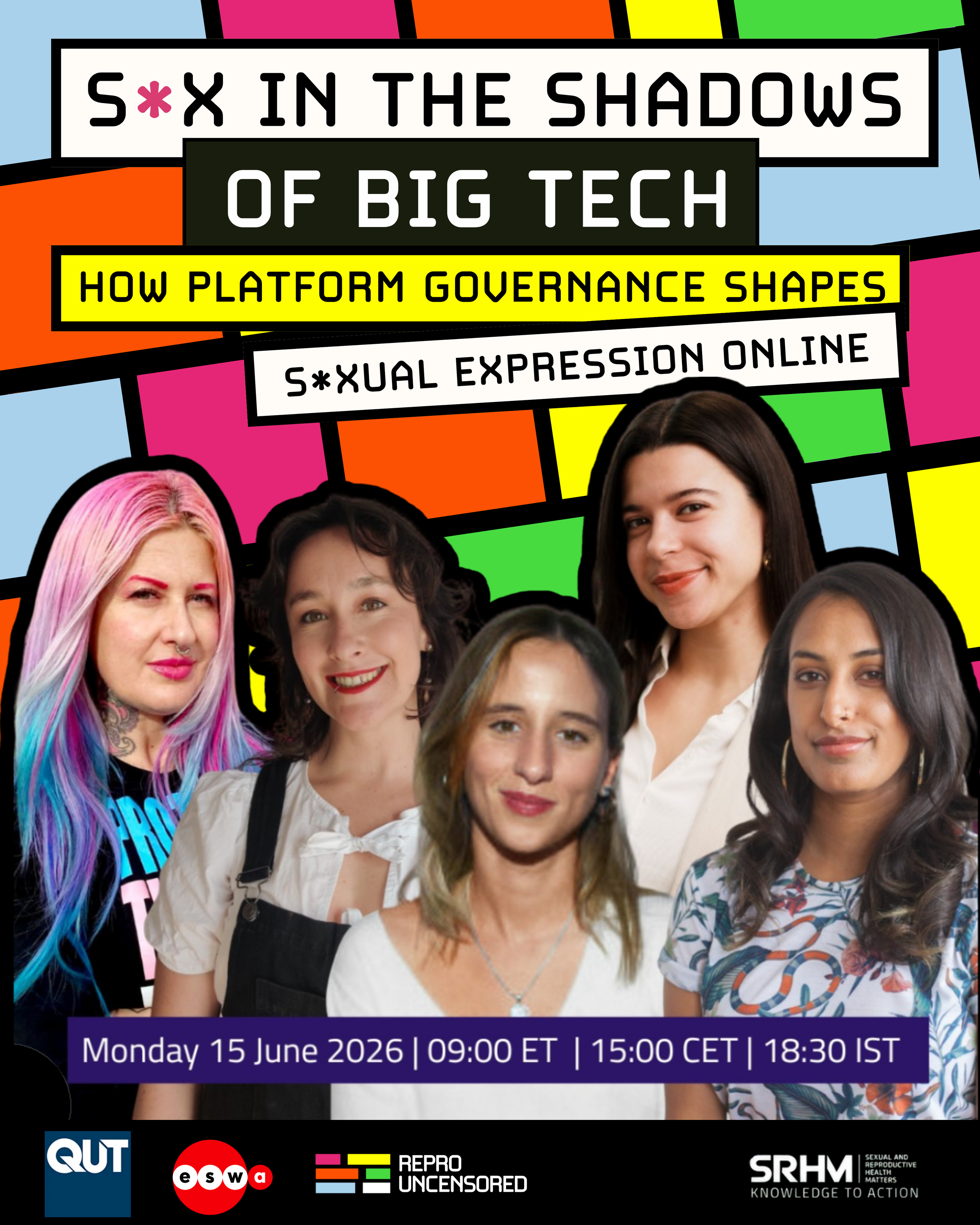
In light of the recent cancellation of RightsCon 2026, SRHM, in collaboration with the Queensland University of Technology, is supporting Repro Uncensored, the European Sex Workers' Right Alliance (ESWA), and other organisations to host this session that was scheduled to take place, to ensure these important conversations continue.
Social media companies like Meta, X, TikTok and YouTube systematically suppress sex education, harm reduction, and health promotion content through their automated content moderation systems. Their restrictive policies and practices make it extremely difficult for life-saving sexual health, rights and justice information to reach people who need it most.
At the same time, these platforms are permissive about sexual harassment and racist, transphobic, misogynist, and whorephobic hate speech. To exacerbate this, they then circulate mis and disinformation and conspiracy theories, both AI-generated and human-generated, about topics in sexual and reproductive health, including about abortion pills, contraception, and puberty blockers.
Whilst the lives of marginalised communities might be expendable to big tech, their data is valuable. Many apps and platforms collect enormous amounts of intimate data, which is frequently shared or sold to third parties and data brokers. This includes period tracking apps, dating apps, telehealth services, search engines and messaging services. Sometimes such data is shared with police and law enforcement in the absence of warrants, subpoenas or court orders, and used to prosecute people for abortion, sexual activity or online expression.
During a time of authoritarianism, digital surveillance, and increasing criminalisation, this webinar explores how social media shadowbanning and deplatforming affect sexual health educators, sex workers, and other marginalised communities.
It shows how BIPOC, LGBTQ+ and disabled users are disproportionately flagged as inappropriate or sexual compared to white, hetero, cis, thin, or able-bodied creators, how women’s health advertising is more likely to be suppressed whilst men’s health issues are medicalised and promoted, and how sex workers are treated as test populations for surveillance and censorship.
By sharing both their experiences of censorship and their strategies of resistance, the speakers seek to prompt ongoing conversations across sectors, regions and communities about how to safeguard sexual health and sexual rights online.
A RightsCon session hosted by Sexual and Reproductive Health Matters following the cancellation of RightsCon 2026.
Read Defending Sexual and Reproductive Rights in the Aftermath of the RightsCon Cancellation by Dr. Zahra Stardust.