
Australia: Sexual Content Moderation and Platform Governance Through a Sex-Positive Framework
By Dr Zahra Stardust
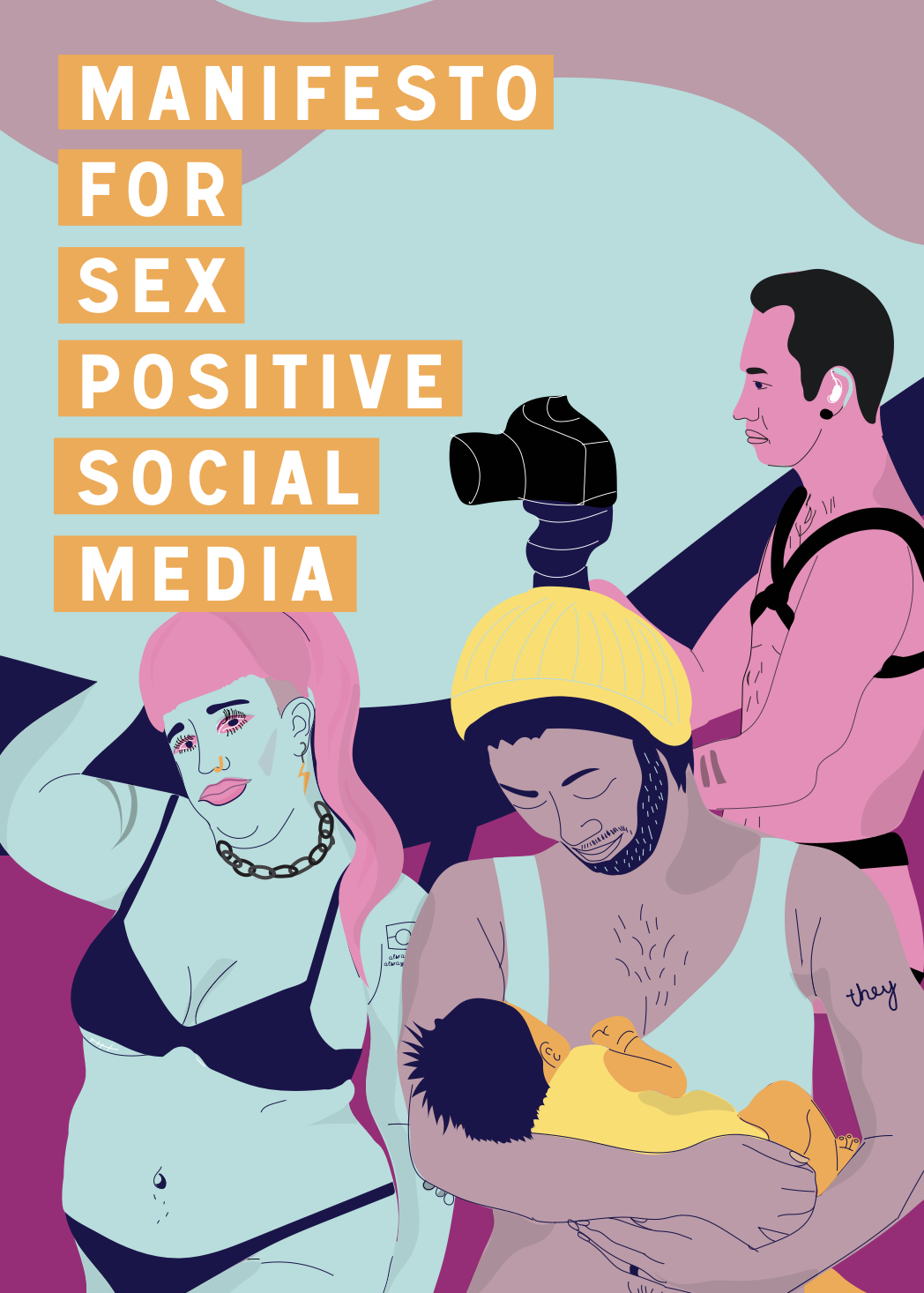
Social media is taking on an increasingly central role in shaping and constraining cultural life, public discourse, and human sociality. Sexual expression is a core part of this ecosystem. However, platform policies are not sex-positive. Through community standards and moderation practices, platforms make private, arbitrary and unaccountable decisions about what forms of sex and sexualities are visible online.
These decisions shape not only what content is removed, but broader attitudes toward sex, bodies, and legitimacy. Platform governance therefore directly structures access to information, participation, and wellbeing.
A central issue identified in the Manifesto for Sex-Positive Social Media is the treatment of sexual content as a homogenous and inherently harmful category. Sexual content is in fact diverse, encompassing expression, identity, intimacy, education, creativity, and labour. The Manifesto argues that “pornography” is a regulatory construct that is overly broad, inconsistently defined, and poorly suited as a basis for moderation.
This produces over-removal and reinforces stigma, particularly where sexual content must be justified through medical, scientific, or artistic framing to be considered legitimate.
At the same time, platforms operate within a structural contradiction. Sexual content has historically driven engagement and contributed to platform growth, yet creators are later restricted, demoted, or removed. This process is described as economic exploitation and gentrification, where sexual labour is instrumentalised to generate value and then excluded.
Sexual content creation is recognised as sexual, creative, and emotional labour, yet creators are denied equitable access to monetisation, visibility, and platform infrastructure. This reinforces economic precarity and marginalisation.
Content moderation systems disproportionately target consensual sexual content, while failing to adequately address harms such as harassment, image-based abuse, and non-consensual content distribution. This results in a structural imbalance where sexual content is over-policed, while harm is insufficiently addressed.
This imbalance reflects broader systems of power. Sexuality is organised through hierarchies that privilege heteronormative, private, and non-commercial intimacy while marginalising queer sexualities, public sexuality, sex work, and non-normative bodies. Platform moderation reproduces these hierarchies, amplifying some identities while suppressing others.
Sexual content online is also a critical source of information, including sexual health education, harm reduction, and access to knowledge on abortion, pleasure, safety, and consent. In many contexts, these conversations function as a substitute for inadequate sex education systems. Restricting such content is therefore not only a moderation issue but a public health and rights concern.
The Manifesto argues that a shift toward sex-positive social media requires structural transformation across platform design, governance, and economic models. It outlines a set of principles that define what sex-positive social media should look like in practice.
Sex-positive platforms must begin by destigmatising sex, recognising that sexual content is not inherently harmful, offensive, or inappropriate, and that it has cultural, social, and political value. This includes rejecting narrow hierarchies of acceptable sexuality and recognising diverse bodies, identities, and practices as legitimate.
They must also integrate sexual cultures into social media, rather than excluding them. This means allowing sexual content to exist alongside other forms of content, recognising that censorship and deplatforming harm sexual rights, knowledge, and health. It also requires enabling users to choose what they access, rather than imposing blanket bans.
A sex-positive approach requires platforms to value the labour of sexual content creators. This includes recognising sex work as work, compensating creators through equitable distribution of profit, and ensuring access to the same tools, services, and protections as other users.
Platforms must also build safer spaces by centering sexual content creators and marginalised communities as stakeholders in governance. This includes moving away from outdated standards of “decency” and instead grounding moderation in human rights principles, including freedom of expression, non-discrimination, and the right to health.
Central to this framework is the need to cultivate consent. The creation, sharing, and use of sexual content must be based on informed, express, specific, and dynamic consent, with users able to control how their content is distributed and withdraw consent at any time. Platforms must also prevent data extraction, scraping, and non-consensual reuse of sexual content, while resisting surveillance practices such as mandatory identity verification.
In addition, platforms must be accountable. This includes providing transparent and explainable moderation systems, accessible appeals processes, and detailed information on how content is classified, ranked, and removed. Users should have meaningful tools to contest decisions and understand how algorithms shape visibility.
Finally, sex-positive social media requires efforts to dismantle structural oppressions. This involves addressing broader systems of inequality, including racism, ableism, homophobia, transphobia, and whorephobia, and supporting legal, economic, and cultural environments that enable equitable sexual expression. Technical fixes alone are insufficient; structural change is required across policy, governance, and society.
Sexual content moderation is a central site of power within digital environments. Current approaches are inconsistent, overreaching, and structurally biased, with significant consequences for access to information, economic participation, and user safety.
The Manifesto for Sex-Positive Social Media provides not only a critique of existing systems, but a concrete framework for rethinking platform governance. It positions sexual expression as a legitimate and necessary part of digital life, and calls for platforms to move from exclusion and control toward equity, consent, and accountability.
Learn more and download the full Manifesto for Sex-Positive Social Media here
Find more information about the project and its contributors here
Manifesto artist credit: Jacq Moon