
Self-Censorship in the Balkans: How Social Structures Shape Online Violence and Political Participation
By Dzana Hodzic
Censorship is not always visible, and it does not always begin with a government, a platform, or the removal of content. Sometimes, it begins much earlier, through the social conditions that shape who feels able to speak in the first place. In the Balkans, technology-facilitated gender-based violence offers a useful lens through which to understand this less visible dimension of censorship: how harassment, threats, misogyny, and emerging forms of digital violence can create a chilling effect that leads people to limit their participation, withdraw from public debate, or censor themselves before anyone else does.
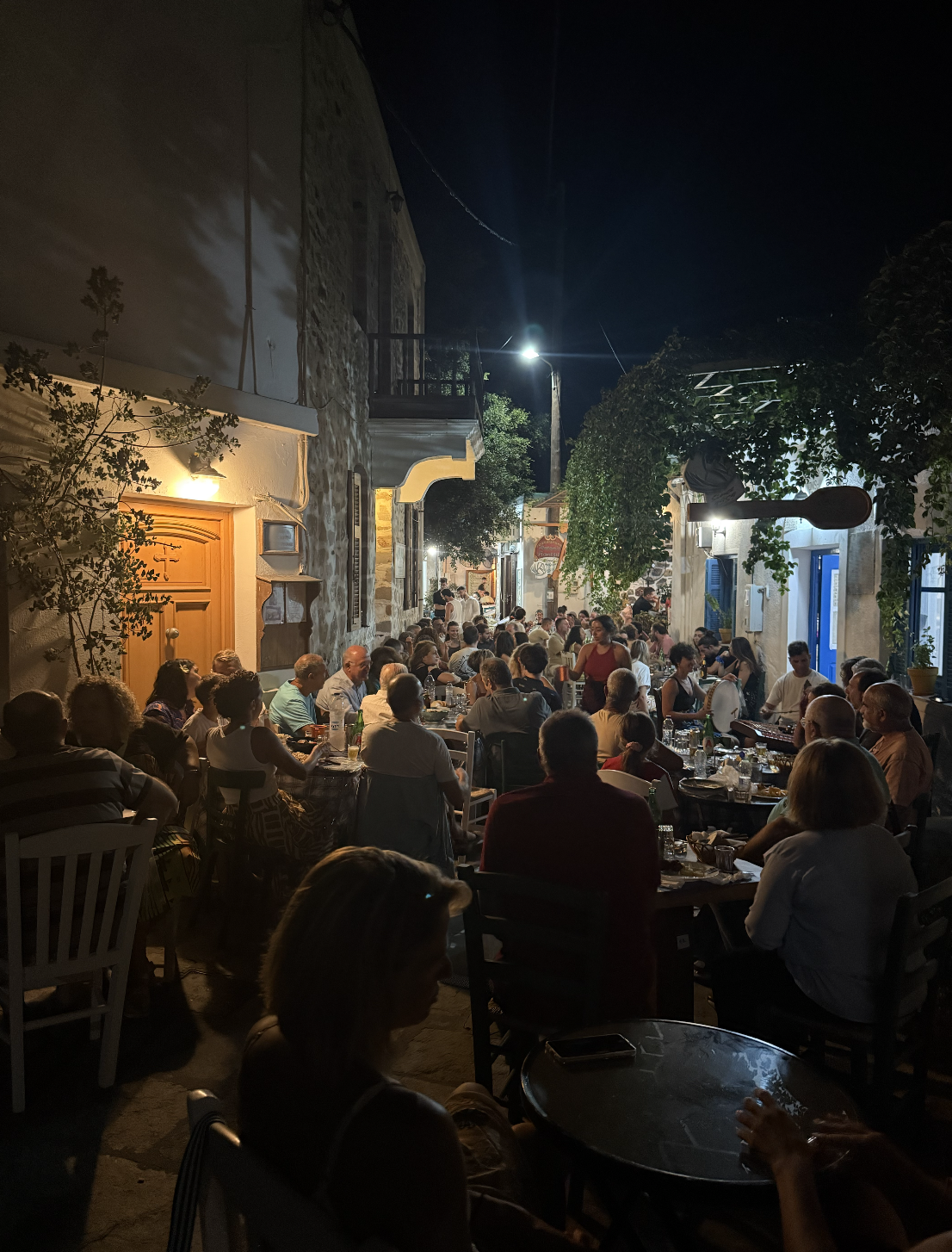
Imagine a young woman living somewhere in the Balkans. Maybe in Serbia. Maybe in Albania. She sits in front of her laptop while protests echo through the streets outside. Perhaps students are marching in Belgrade, demanding a better future. Perhaps demonstrators in Tirana are protesting corruption.
She opens Instagram. Or X. Or Facebook. She wants to join the conversation. She hesitates.
The internet can give her a voice. It was supposed to give everyone a voice. It is just a post on social media, right? Just a few words about politics, feminism, the environment, or the economy. Maybe she thinks for a second: What is the worst that could happen?
Then she remembers the comments section of her favorite political influencer, the deepfake of a well-known female protester, the death threats her friend received after posting about reproductive rights, and the hate a female politician received after a press conference.
She closes her laptop while the protests still rage outside her window.
Nobody told her not to speak, but she saw what happened to women who speak too loudly, too publicly.
This is self-censorship. It is perhaps the most invisible form of censorship because, from the outside, it can look like a free choice. It happens when people silence themselves before anyone else has the chance to. Nobody removes their words. Nobody bans them from speaking. Fear does the work instead.
The fear of online violence. The fear of harassment, cyberbullying, stalking, death threats, and hate.
In the age of artificial intelligence, new forms of online violence continue to emerge, from voice cloning and fabricated evidence to non-consensual sexual imagery and deepfakes.
Disagree with a politician? Fabricate a compromising image. Create a fake video. Clone their voice.
As these technologies become more accessible, the risk no longer lies only in what can happen online, but in what people begin to imagine could happen. The result is not only new forms of violence, but a new form of fear: anticipation.
While laws and regulations struggle to keep up with rapidly evolving threats, people may choose not to use their voices online or withdraw from the public sphere altogether. Across Europe, female politicians, journalists, activists, and researchers have faced online violence that has altered how, where, and whether they participate publicly.
Researchers often refer to this as the “chilling effect”: people become less willing to express themselves when they fear negative consequences. The circumstances cool them, their voices, and their fire.
The problem is that censorship is usually imagined as governments banning newspapers or arresting journalists and academics. But censorship can also happen quietly. Behind closed doors. In front of your own laptop while protests are raging outside your window.
It can happen when women delete a post before publishing it, choose not to attend a protest, decide against running for office, or stop speaking their minds. No one explicitly told them not to. They simply learned that speaking may come at a price.
This is also why the impact of technology-facilitated gender-based violence cannot always be understood through numbers alone. In many contexts, some of the most important evidence comes from qualitative accounts and first-hand testimonies: what women say they no longer post, the conversations they avoid, the subjects they stop discussing, and the public spaces they choose to leave.
The absence of participation is difficult to count. Yet that absence can tell us something important about how censorship operates.
Of course, the relationship between online violence and self-censorship is not straightforward. Not everyone who experiences harassment withdraws from public life, and not every decision to remain silent can be attributed to fear or digital violence. For some, online attacks can produce the opposite response, strengthening political engagement, solidarity, or collective resistance. Social, political, economic, and cultural conditions all shape who speaks, who remains silent, and why.
Self-censorship should therefore not be understood as an inevitable consequence of online violence, but as one possible outcome within a much more complex relationship between technology, power, gender, and participation.
Democracies rely on participation. If one part of society gradually withdraws from public debate because participation becomes too costly, democracy loses voices long before elections take place.
Although self-censorship exists everywhere, its consequences can become particularly significant in environments where democratic institutions are under pressure, political polarization is high, or gender inequalities persist. The Balkans offer one context in which to examine the relationship between online violence, social structures, and democratic participation.
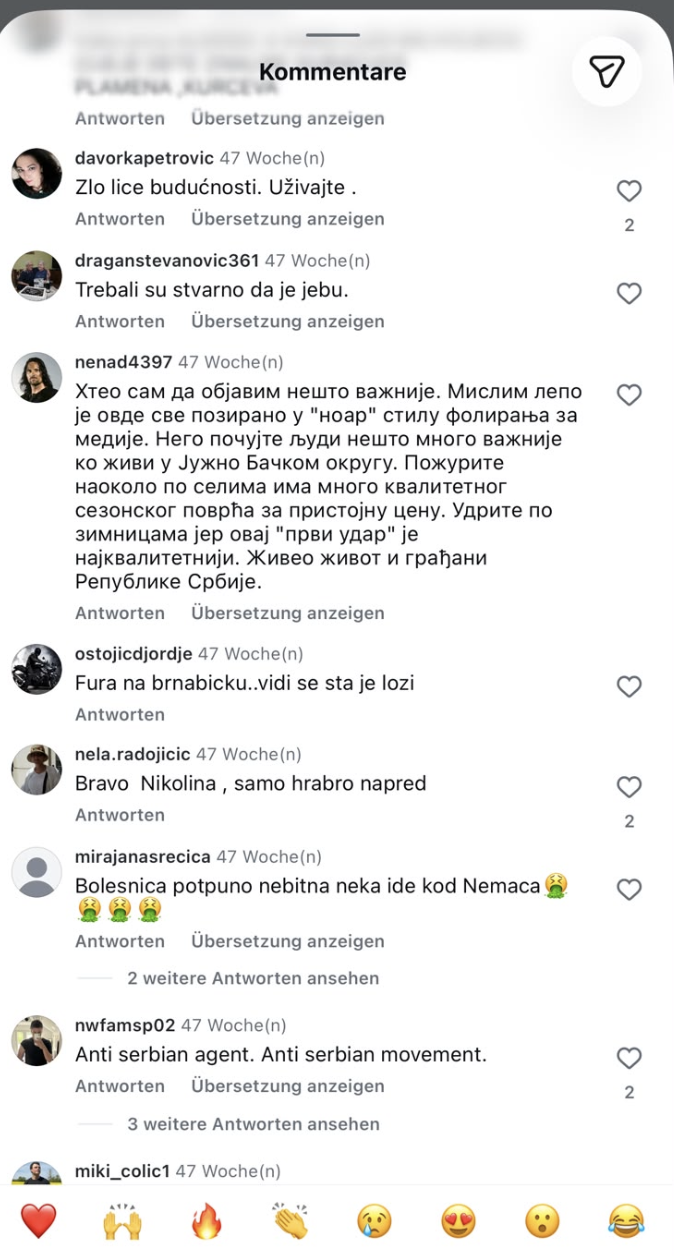
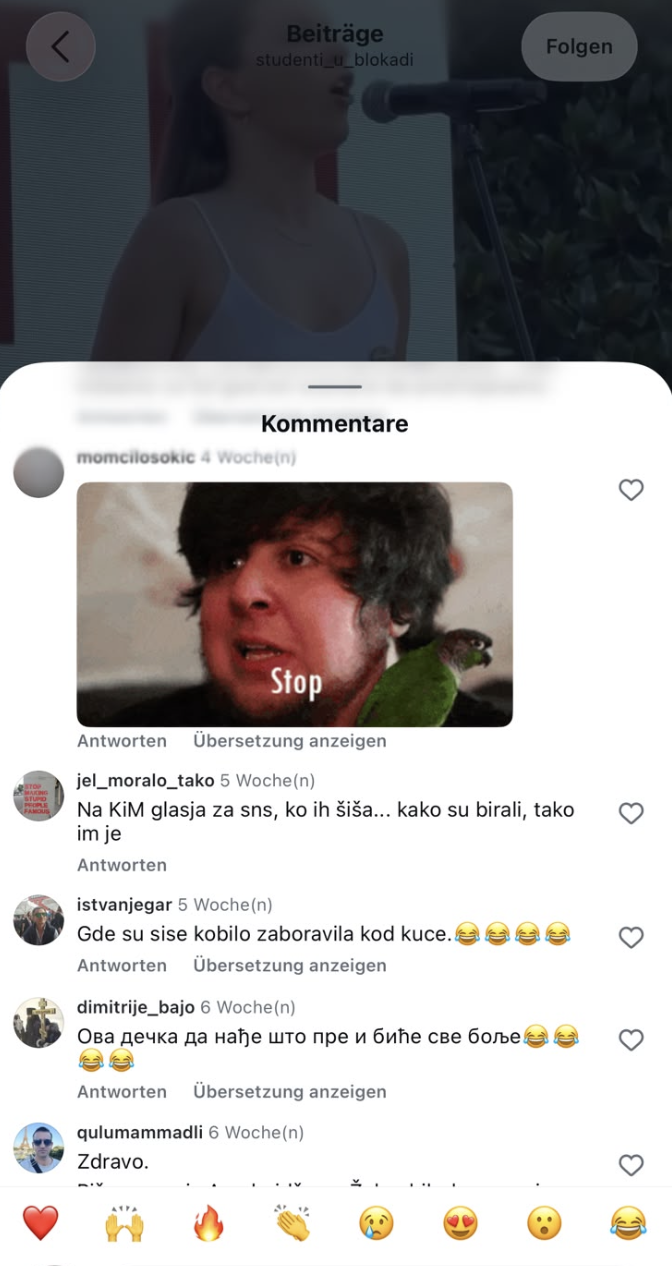
Existing legal protections may be insufficient or poorly enforced, while distrust in institutions can make victims less likely to believe that reporting abuse will lead to meaningful consequences. In these environments, digital violence does not simply affect individuals. It can influence who participates in public life and under what conditions.
During the recent student protests in Serbia, women faced not only the offline risks associated with political participation, but also the question of what could happen once their faces appeared online. In one example documented during the protests, a video of a young woman speaking publicly attracted comments mocking her appearance, sexualizing her, questioning her credibility, and suggesting that she belonged on OnlyFans rather than in political debate. Other comments dismissed her intelligence or attacked her simply for speaking publicly.
These comments may appear individually insignificant, particularly compared with explicit threats or direct acts of violence. But collectively, they illustrate the social environment in which self-censorship can develop. Seeing another woman ridiculed or sexualized for expressing a political opinion sends a message not only to her, but to everyone watching: public participation can come with a social cost. You do not necessarily need to experience that violence yourself to begin adjusting what you say, where you say it, or whether you speak at all.
Participation, in other words, no longer carries only offline risks. Increasingly, it carries digital and social ones too.
Online violence rarely develops in isolation.
Technology-facilitated violence does not emerge separately from the societies in which it occurs. Digital spaces often reproduce and amplify existing social structures: gender hierarchies, political divisions, economic inequalities, and cultural expectations about who is entitled to speak publicly, what they can say, and how they are expected to behave when they do.
Cultural and social norms can be particularly important in shaping these boundaries. Ideas about gender, sexuality, family, respectability, tradition, religion, or appropriate political behavior do not disappear when people go online. They travel with us into digital spaces, where they can be reinforced by communities, political movements, media narratives, and platform dynamics. A woman speaking publicly about politics, reproductive rights, sexuality, or gender equality, for example, may be judged not only for the position she takes but for challenging expectations about how women should present themselves or participate in public life.
These dynamics are neither unique to the Balkans nor uniform across the region. Cultural norms differ between countries, communities, generations, and individuals, and they are constantly being contested and renegotiated. But this complexity is precisely why online violence cannot be understood through technology alone. The same platform, algorithm, or technological tool can have very different social consequences depending on the environment in which it operates.
Technology can give existing prejudices and power structures new forms, greater visibility, speed, and unprecedented reach. A sexist remark that might once have remained within a small social circle can now be repeated by thousands of accounts; a political attack can become a coordinated pile-on; a social stigma can be transformed into a meme, a deepfake, or a campaign of harassment.
At the same time, these same digital spaces can enable solidarity, counter-speech, community building, and resistance.
Political rhetoric also helps set the boundaries of what becomes socially acceptable. When politicians publicly mock, insult, or sexualize female protesters, politicians, or journalists, supporters can reproduce the same language online.

Digital platforms do not create misogyny from nothing. The online world rarely invents inequalities. More often, it mirrors and magnifies those that already exist offline.
One of the greatest promises of the internet was that it would blur the boundaries between the private and the public, allowing more people to participate in political debate. Yet online violence can produce the opposite effect.
Some women retreat from public discussions back into private spaces, not because they lack opinions, but because expressing them has become too costly.
The digital public sphere, which promised greater inclusion, can reproduce the same hierarchies that have historically excluded women from political life.
Understanding self-censorship therefore requires looking both online and offline. It means asking not only what platforms permit or remove, but what kinds of speech a society rewards, punishes, stigmatizes, or protects; whose participation is considered legitimate; whose safety institutions take seriously; and who learns, through observing the experiences of others, that speaking publicly may come with consequences.
This last point matters because people do not necessarily need to experience online violence themselves to change their behavior. They can learn the potential cost of visibility by watching what happens to someone else.
The woman sitting behind her laptop may never become a politician. She may never publish that post. She may never know that her silence has a name.
But every time someone decides not to speak because they fear the consequences, democratic life risks losing another voice before it is ever heard.
If we only look for censorship after something has been said, we risk overlooking all the speech that fear prevented from existing in the first place.
Selected Sources
The ideas in this article draw on research in political science, media studies, and gender studies. Readers interested in exploring the topic further may find the following sources particularly useful.
Broding, Ingrid (2026). Feindbild Frau: Wie die digitale Welt unsere Gesellschaft verändert.
Krook, Mona Lena (2020). Violence Against Women in Politics.
Noelle-Neumann, Elisabeth (1974). The Spiral of Silence: A Theory of Public Opinion.
Penney, Jonathan W. (2017). Internet Surveillance, Regulation, and Chilling Effects Online: A Comparative Case Study.
UNESCO (2021). The Chilling: Global Trends in Online Violence Against Women Journalists.