
Reproductive Rights, UPR, and Human Rights Accountability in the U.S.
By Repro Uncensored
Context: The Universal Periodic Review and Reproductive Rights (UPR)
Participant Organizations: Guttmacher Institute, Ipas US, Pregnancy Justice, Global Justice Center, Jane’s Due Process, if/when/how, Repro Uncensored, Louisiana Abortion Fund, The Holy HOE Institute, Physicians for Human Rights, Birthmark Doulas, Lift Louisiana, ReJAC, National Latina Institute for Reproductive Justice
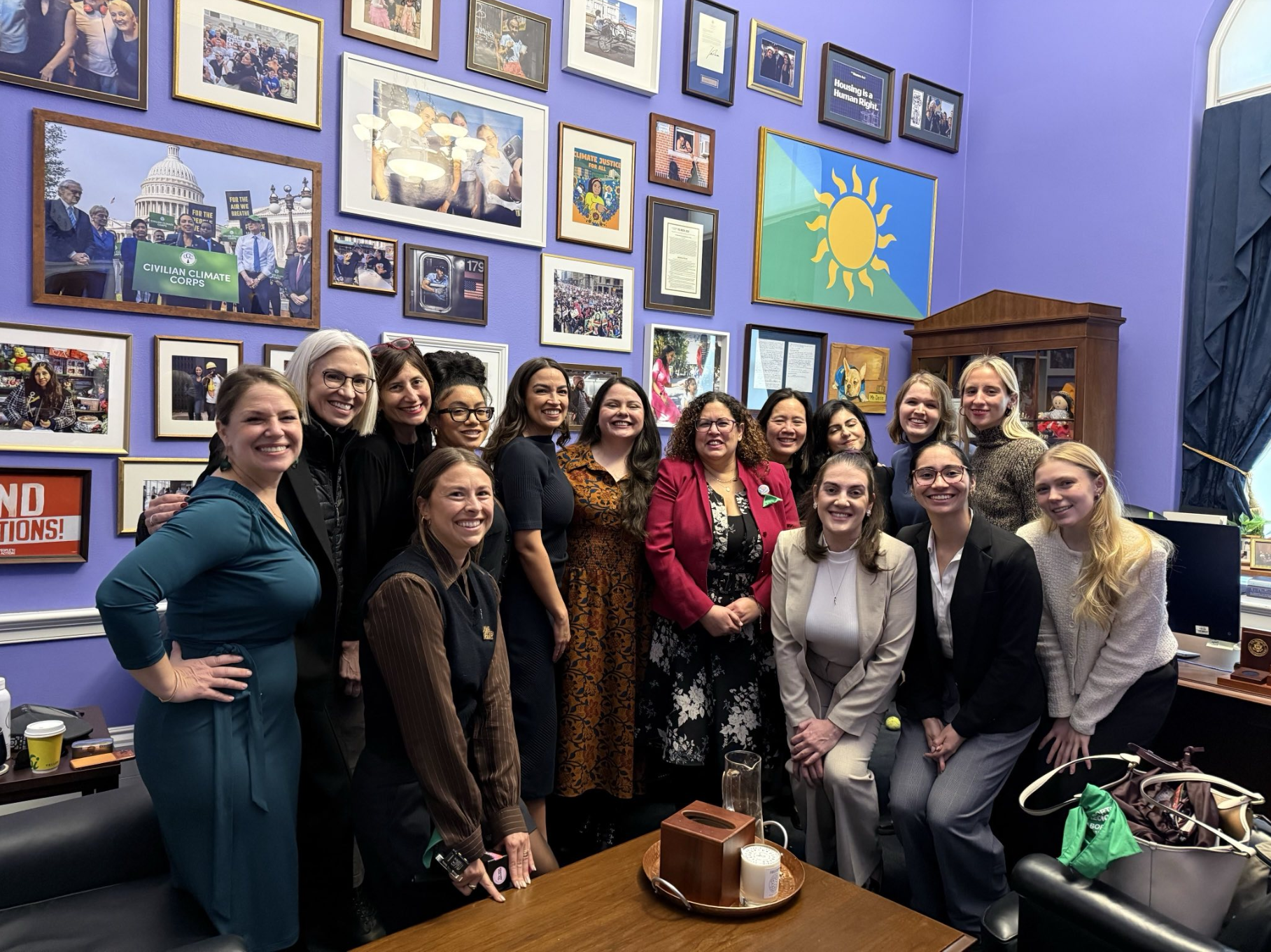
The group of SRHR organizations and advocates with Congresswoman Alexandria Ocasio-Cortez in her office in Washington DC in December 2025
The Universal Periodic Review is the primary mechanism through which the human rights records of all United Nations Member States are reviewed by their peers. It is designed to assess compliance with international human rights law through government reporting, civil society submissions, and interactive dialogue at the UN Human Rights Council.
As the United States approached its fourth UPR cycle, reproductive rights had significantly deteriorated nationwide following the Dobbs v. Jackson Women’s Health Organization decision. In response, a coalition of legal, medical, research, and community-based organizations submitted a detailed stakeholder report documenting how abortion bans and related policies violate multiple internationally recognized human rights, including the rights to health, life, privacy, freedom of movement, non-discrimination, and bodily autonomy. This submission centered on lived experiences and empirical data, emphasizing the disproportionate impact of reproductive restrictions on Black, Indigenous, LGBTQIA+, low-income, immigrant, and criminalized communities.
U.S. Withdrawal from the UPR Process
Despite this extensive civil society documentation, the United States declined to participate in its scheduled UPR review. This decision prevented advocates from presenting evidence within the formal international venue designed for accountability and peer scrutiny.
The absence of the United States from its own review marked a significant departure from established human rights practice and limited the effectiveness of the UPR process itself. It also shifted greater weight onto alternative forms of documentation, public reporting, and legislative oversight.
As part of these efforts, this work also connects to the People’s Universal Periodic Review (People’s UPR), a people-led accountability initiative convened in New York City in response to the United States’ declining engagement with United Nations human rights mechanisms. The People’s UPR creates a public forum where evidence that would ordinarily be presented through formal UN review processes can be heard directly. This year’s convening is co-hosted by University of Illinois Chicago School of Law International Human Rights Clinic and Saint Louis University School of Law Human Rights at Home Litigation Clinic, with support from a national planning committee. More than 30 directly impacted individuals will deliver sworn testimonies documenting human rights violations, centering lived experience within international accountability frameworks. The event concludes with a press conference urging the United Nations to hold the United States to its international obligations and will be livestreamed for audiences in Geneva and across the United States.
Changes to U.S. Human Rights Reporting Practices
In parallel with its withdrawal from the UPR, the U.S. Department of State issued new internal guidance in November 2025 to embassy personnel responsible for drafting the congressionally mandated Country Reports on Human Rights Practices.
These reports are required under U.S. law to assess human rights conditions using internationally recognized human rights standards. However, the new guidance instructs staff to reinterpret certain reproductive health protections, including abortion and gender-affirming care — as potential human rights abuses, while omitting documentation of harms arising from denial, criminalization, and restricted access to care.
In February 2026, a group of Members of Congress led by Nikema Williams and Alexandria Ocasio-Cortez formally objected to this guidance in a letter to the Secretary of State. They argued that the guidance contradicts international human rights law, undermines the integrity of U.S. reporting obligations, and weakens global human rights accountability.
Public Documentation Through Visual Media
Key excerpts from the congressional letter were publicly documented through a series of social media content that circulated widely online with the support of influencers such as @Feminist and @Women_in_america. These visuals distilled complex policy language into accessible summaries, highlighting how the guidance reframes reproductive healthcare as coercion while excluding evidence of rights violations linked to abortion bans.
The posts explicitly affirmed that abortion and gender-affirming care are recognized as essential healthcare under international human rights law. At a moment when formal accountability channels were restricted, this visual documentation functioned as a public record, enabling broader scrutiny by journalists, advocates, and international observers.
Parallel Accountability at UNGA
In the absence of UPR participation, evidence that would ordinarily be presented in Geneva was shared publicly during the United Nations General Assembly in New York through a convening focused on reproductive rights and human rights accountability.
Advocates, researchers, and community leaders presented data, testimony, and legal analysis drawn directly from UPR shadow reporting. The event, Uncensored: Feminists on Repro at UNGA, operated as a parallel accountability space, translating formal human rights documentation into a public forum accessible to international and domestic audiences.
This approach underscored how accountability does not disappear when governments disengage from official mechanisms, but instead re-emerges through public documentation, cross-border dialogue, and community-led evidence sharing.
Why This Matters
Taken together, the U.S. withdrawal from the UPR, changes to State Department reporting guidance, and reliance on public and legislative documentation illustrate a broader shift in how human rights accountability is being contested.
Reproductive rights serve here as a critical case study. The issue is not only the substance of abortion policy, but how human rights standards are defined, reported, and enforced when formal oversight mechanisms are weakened.
This research and advocacy project situates reproductive rights within the larger architecture of international accountability, emphasizing the growing importance of civil society submissions, public records, and alternative forums when states retreat from their human rights obligations.