
When Censorship Becomes a Lawsuit How one artist’s case is challenging Meta under the Digital Services Act
By Emma Shapiro
I think you might know the feeling: The conversation you were in just turned to static. Your cheeks flush. Your stomach drops. You hear yourself say, What the fuck?
Your account has been erased.
I've spent years talking to artists, activists, and creators whose work has disappeared in that gut-wrenching instant. No amount of experience, careful wording, backup plans or familiarity with platform rules really prepares you for it. It always feels surreal. One second you're there; the next you're gone, trying to prove you ever existed at all.
For me, that feeling is inseparable from Exposure Therapy.
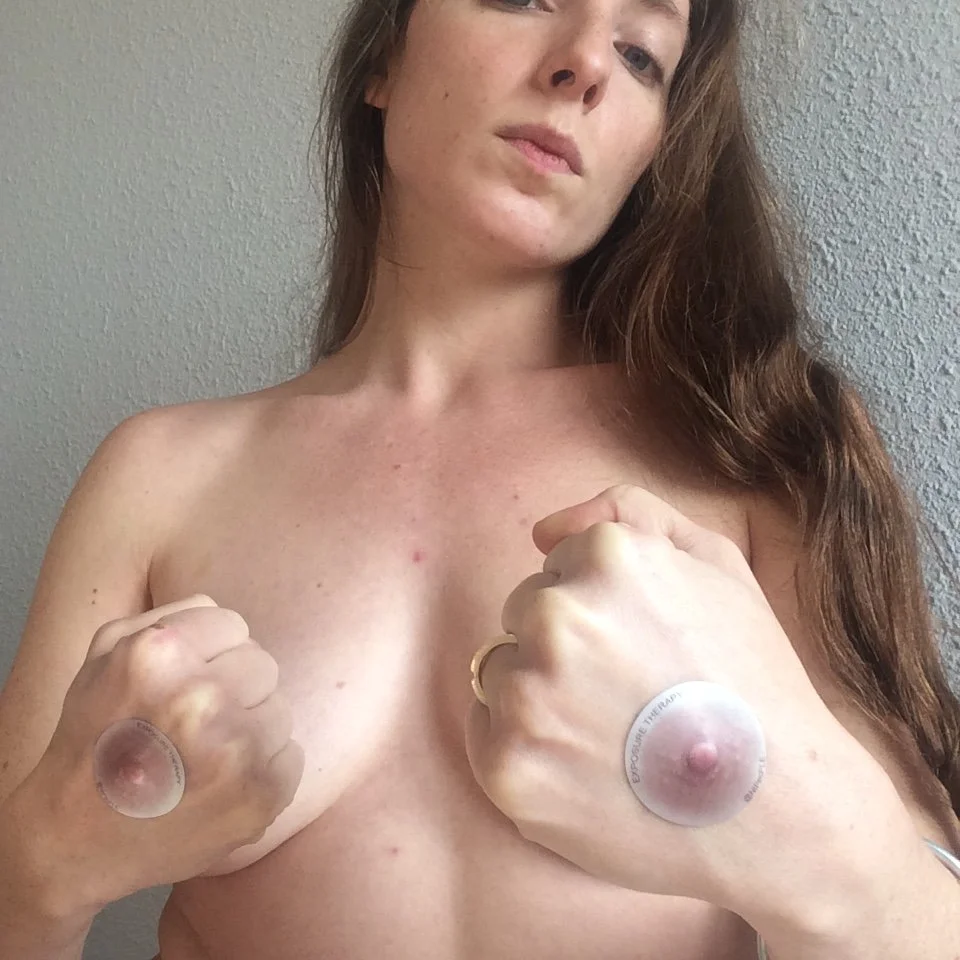
Exposure Therapy, my body-equality project, started during one of the most pivotal periods of my life. It became a lifeline during a transition to a new country, an artistic practice that reminded me art could be fun, and then a community, and the thing that quietly shaped almost everything I do today. Through it I found collaborators and friends. It grew from a reaction against nipple censorship, to movement about artistic freedom, bodily autonomy, and the invisible systems that decide whose voices are allowed to remain online.
And throughout my changing life, our changing world, and an evolving conversation, one thing remained constant: censorship. Exposure Therapy has been reported, restricted, removed, reinstated and misunderstood more times than I can count. Every removal stung, even when I expected it. Every appeal felt like shouting into a void.
So when Meta removed my account this time, my first reaction wasn't anger, it was exhaustion.
I did almost throw my hands up, in spite of all my anti-censorship advocacy. It felt like too much - always at the wrong time, right? - and the start of another frustrating appeals process that would probably end with a vague apology about a "mistake," if it ended at all.
But then something unexpected happened: For the first time, I realized that I knew where to go next.
That sentence sounds small, but for years it had been the missing piece. The hardest part of platform censorship isn't just losing your work, it's the overwhelming sense that there is nowhere to turn.
For a long time, "the next step" depended on luck. Maybe someone would amplify your case. Maybe someone knew someone who worked at Meta. Maybe organizations like Don't Delete Art could spend hours advocating on your behalf—doing labour they should never have had to do in the first place…It's a broken system that quietly transfers responsibility from the platforms to exhausted activists, artists and volunteers. Instead of building meaningful accountability, companies have relied on communities to clean up the mess.
I'd been paying attention to that problem for years - writing about it for journals and magazines, trying to show the world what it looked like to become invisible online.
So, when the European Union introduced certified Out-of-Court Dispute Settlement (ODS) bodies under the Digital Services Act, I became fascinated. They weren't perfect, and many people questioned how much power they would actually have, but they represented something we'd never really had before: an independent place to take your case after a platform rejected your appeal.
Around the same time, I took The Art of Defending Artists 2.0, a capacity-building course with Avant-Garde Lawyers. And I learned something lawyerly, dry, and effective: accountability is procedural. I learned about documentation, orders of operation, and how to approach matters of artistic censorship strategically. So that's exactly what I did.
First, I appealed through Meta. They rejected it.
Then, I took the case to an ODS body (because I live in Europe). They rejected it too.
Ordinarily, that's where my story might end–just getting a little further than usual, happy to partake in a new system for accountability. But because I'd been researching these new mechanisms—and had even written about what they might mean for artists—I asked one more question. I wanted to understand why the ODS body had reached its decision.
The answer changed everything. It became clear that key information about my case hadn't just been withheld from me. It had also been withheld from the independent body reviewing the dispute.
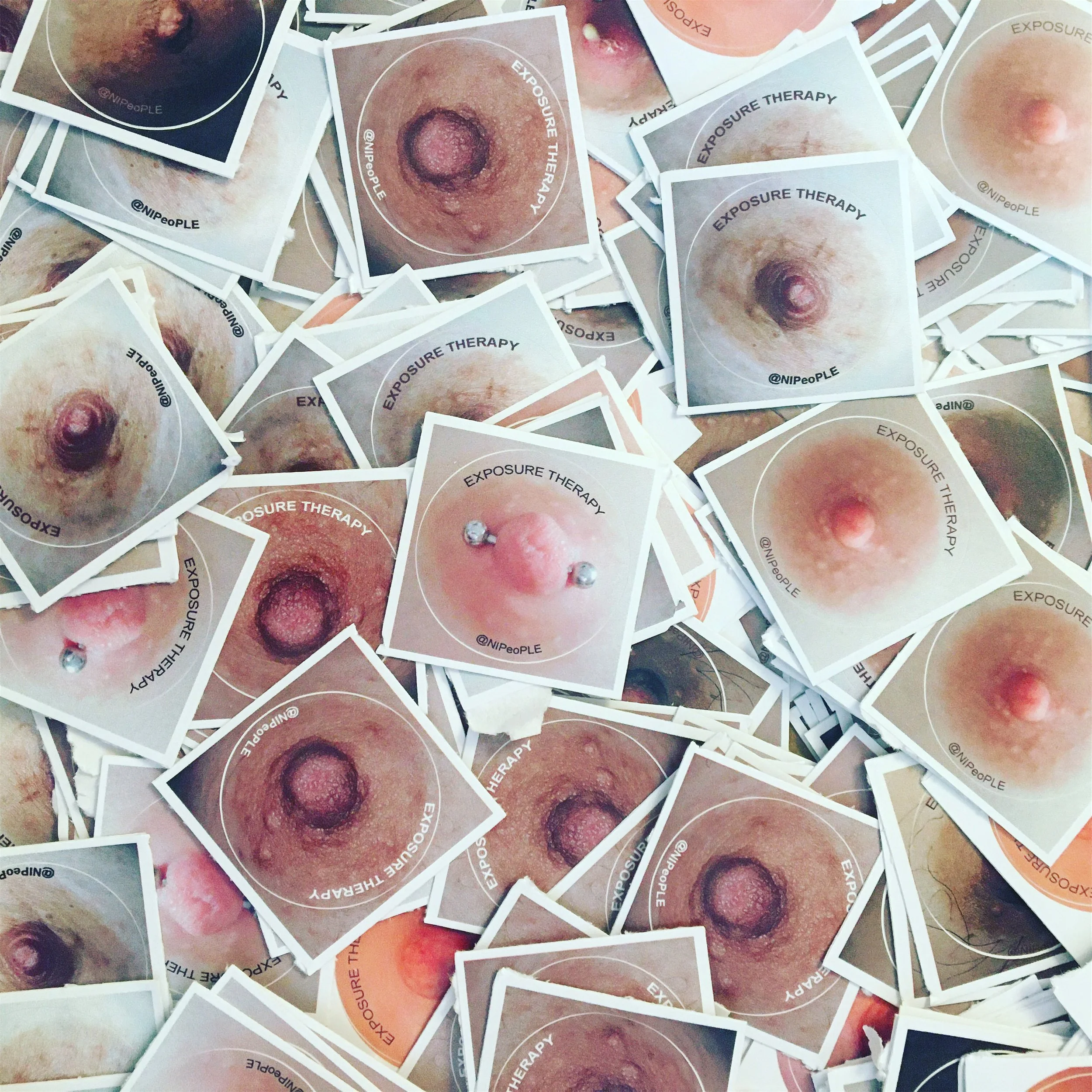
The reason Meta had given for removing my account on December 7, 2025, was “Account Integrity.” The event was triggered following a post I had made of a short video showing a metal pole covered in stickers. One of those stickers depicted a nipple—not attached to a body, not depicting nudity, not showing a person at all. A small image on a public artwork became the basis for the removal of an entire archive, community, and years of work. My account had not been recently flagged, infact it had been rather quiet lately and I had been careful about my posts.
Nevertheless, the account went down.
My question, and my case, surrounds the violation of “Account integrity.” Account Integrity is generally associated with things like spam, impersonation, automated behaviour, or attempts to evade enforcement. None of those things had happened. I wasn't given a clear explanation of what I had done, why the content was considered a violation, or any meaningful opportunity to respond.
That isn't simply frustrating–under the Digital Services Act, it may be unlawful.
Shortly afterwards, lawyers at Avant-Garde Lawyers reached out after seeing me speak publicly about what had happened. They believed the issues raised by my case were worth pursuing—not only because of what happened to me, but because of what it revealed about the systems artists are forced to navigate every day.
Together, we have filed a complaint with Spain’s Comisión Nacional de los Mercados y la Competencia (CNMC), arguing that Meta failed to meet its obligations under the European Union’s Digital Services Act. The complaint is not simply about whether a platform can remove content. They certainly can, and do, make moderation decisions every day. The question is what happens when those decisions affect people’s livelihoods, communities, archives, and ability to participate in public life. What happens when the process itself fails? What happens when a person is punished without being given a meaningful explanation, or a real opportunity to respond?
Those questions are bigger than my account, and the answers to those questions will matter to us all.
I keep saying I was "lucky" to be seen in my struggle. But the truth is, this wasn't luck–it was years of paying attention. Years of documenting censorship. Years of talking to other artists. Years of believing that these stories mattered, even when they felt repetitive, even when they were dismissed as isolated "mistakes."
Those years, and our collective struggle, gave me something I never had before: finally a case against Meta.
Even if Meta restored my account tomorrow without explanation—as though none of this had happened—the legal question wouldn't disappear with it.
For years, platforms have been able to end these stories by quietly giving accounts back and calling it a mistake. A mistake isn't accountable. You can't meaningfully challenge a mistake. You can't build precedent from a mistake. This time, we don't just know that something went wrong, we know where to point to it. And for all the artists and creatives who have felt lost, erased, and unrepresented over the years, we deserve answers.