
Self-Censorship as Survival: Faith, SRHR, and Digital Backlash
They Called Me a “Hell Owner”, I Became a Muslim Health Advocate Anyway
By Dina Chaerani
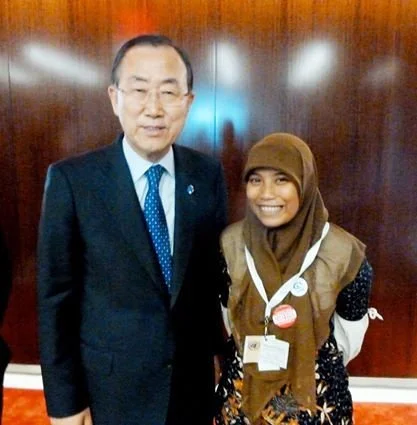
I was fourteen the first time my body stopped feeling like it belonged to me.
There are things you don’t forget, not because you want to hold on, but because your nervous system stores them like evidence. The weight of a hallway. The sound of a door. The moment you realise your “no” is being treated like background noise.
For years after, I carried two versions of myself at once: the girl who wanted to disappear, and the girl who was quietly taking notes. Not the romantic kind. The kind of survivor learns to take when the world keeps asking you to prove what happened, to justify your pain, to behave like the “perfect victim” so people can decide whether you deserve care.
I didn’t have the language for sexual and reproductive health and rights (SRHR) yet. I didn’t know words like consent, bodily autonomy, survivor-centred care, or trauma-informed support. But I knew what it felt like to be failed by silence, by institutions, by culture, by my teachers, by the government, by people who loved me but didn’t know what to do with my truth.
That’s where my advocacy began: not as a career, not as a “calling” that conveniently fits into a social media headline, but as a refusal. A refusal to let harm be the only thing that shaped my life.
And then I did something else that turned my life inside out: I took off my hijab.
For some people, that sounds like a personal decision. For me, it was treated like a public betrayal.
I lost friends I thought would be in my life forever. Some of the harshest backlash didn’t come from strangers. It came from the people closest to me. They were the ones who knew my soft parts and still chose to weaponise them. There were moments of pushback at home too: the kind that isn’t always loud, but still heavy. The kind that says, Why can’t you just make your life easier? Why do you have to invite attention?
Online, it was worse. My name became a target. My photos became a debate. I was called things I won’t fully repeat here, but you can imagine them: “bitch,” “c*nt,” “hell owner.” The point wasn’t creativity. The point was control. A reminder that a woman’s autonomy, especially a Muslim woman’s autonomy, will always make some people angry, because it interrupts the story they want to tell about her.
That was my first real lesson in power: when you step outside a script and norms, people try to punish you back into it.
The lie that faith and SRHR cannot co-exist
Somewhere along the way, I realised something that still shapes my work today: in my context, SRHR isn’t only contested through policy, it’s contested through identity. Through who you are allowed to be. Through what version of “good” you are expected to perform.
In too many conversations about comprehensive sexuality education (CSE), Muslim communities are treated as a problem to manage, not people to serve. Faith is framed as the enemy of health, and young Muslims are framed as either “too conservative” to understand SRHR or “too risky” to be trusted with it.
But I am Muslim. I am also a youth advocate and SRHR professional. I am also a survivor. I live inside the so-called contradiction, and I refuse to choose a smaller self just to make other people comfortable.
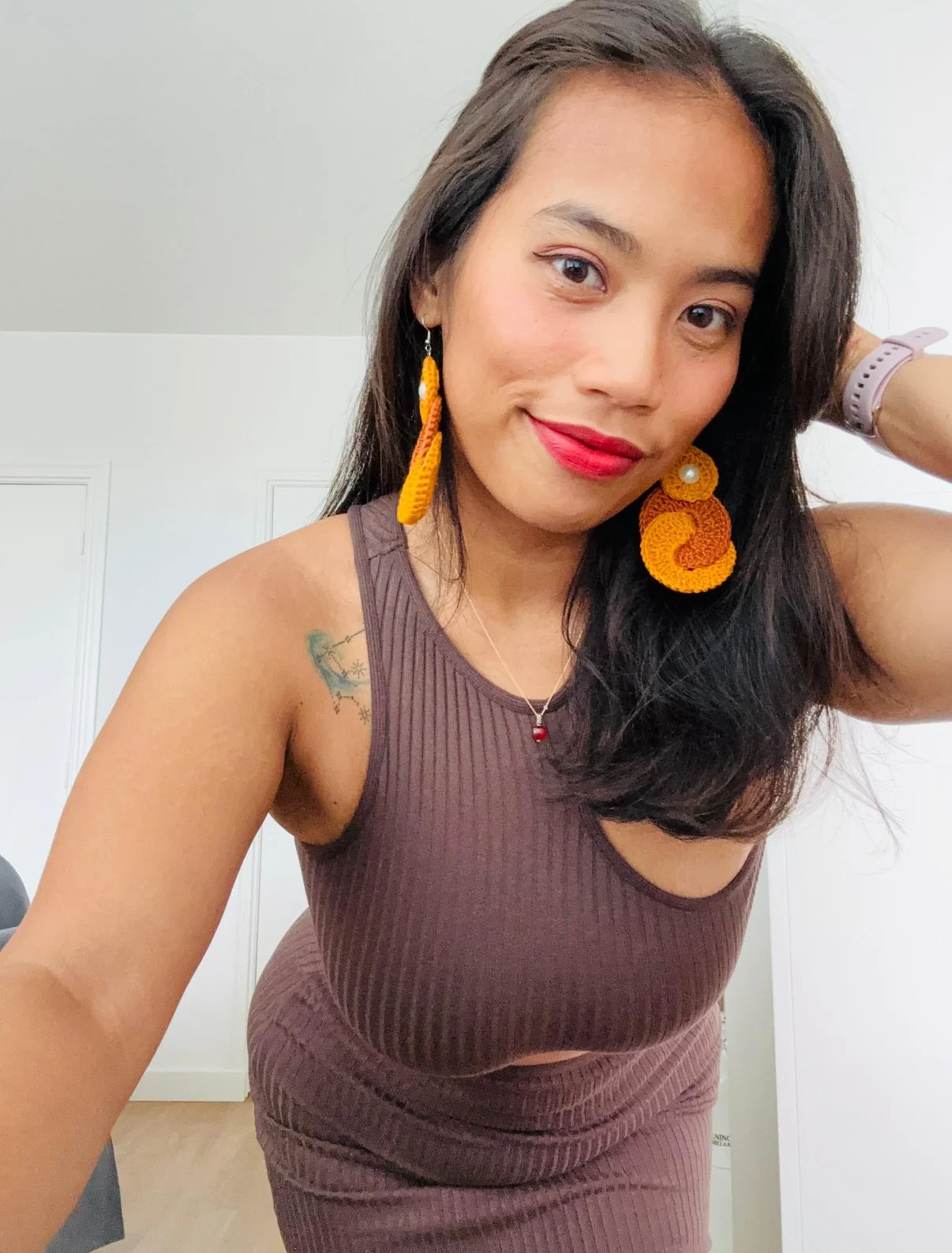
My work has never been about watering down rights to fit religion, or using religion to erase rights. It has been about building a bridge that actually holds weight. Because when you work in communities where faith shapes daily life, values, family decisions, and social belonging, you learn quickly: if your approach humiliates people, it won’t last. If your approach ignores power, it won’t be safe.
So I started asking different questions.
What does CSE look like if it doesn’t arrive like a foreign object or western culture, but as a conversation people can recognise as their own?
What does it mean to talk about consent and bodily autonomy using language that doesn’t shame faith, but also doesn’t excuse violence?
What happens when a young person doesn’t have the option to “just leave” or “choose” between their community and family or themselves, but still deserves information, protection, and pleasure without fear?
These questions didn’t make my work easier. They made it sharper.
Digital rights are the terrain.
People often talk about “digital safety” as if it’s separate from SRHR, as if it’s an extra module you add when there’s time.
But for young people, especially young women, queer youth, survivors, and young people in conservative contexts, the internet isn’t a bonus space. It’s where they learn. It’s where they ask questions they cannot ask at home. It’s where they look for help when adults fail them. It’s where stigma meets surveillance.
And it’s where backlash scales.
I learned this the hard way. When your work is public, and your body is politicised, harassment isn’t just emotional. It becomes strategic. People try to isolate you, discredit you, and exhaust you. They flood your comments. They report your posts. They frame your education as “promoting immorality.” They dox you. They make it dangerous to exist.
That’s why I build digital rights into my SRHR work the way you build a foundation into a house. Not decorative. Structural.
Because a sexuality educator without digital safety is a target. A survivor without privacy is at risk. A youth-led movement without platform resilience is vulnerable to being erased.
Building what I needed when I was fourteen
At some point, I stopped waiting for the perfect system to appear. I built what I wished existed when I was fourteen.
I built Lapor Yuk!, a digital reporting platform that connects survivors with support, because I know what it means to need help and not know where to turn. I co-founded Sexdugram because I know what it means to grow up with a million rules about your body and almost no truthful information about it.
And I did it while being told—again and again—that Indonesia “isn’t ready” for CSE, that youth “can’t handle” these conversations, that faith communities will “never accept” it, that survivors should “move on,” that women who speak publicly should expect abuse.
I heard all of it. And I kept going.
Not because I’m fearless. I’m not.
Because I understand something many institutions still struggle to grasp: young people don’t need permission to know and need the truth.
Authenticity and Partnerships: the work behind the work
People love the visible parts of advocacy: the speeches, the panels, the viral posts, the neatly designed toolkits.
But the work that actually shifts systems is often quieter.
It’s being authentic and partnership-building: the slow, sometimes frustrating labour of trust. The meetings where you translate between worlds. The calls where you ask, gently but firmly, Who is this for, really? The moments where you push back on tokenism, even when it would be easier to smile and take the photo.
My approach to partnerships is simple, because I know many people in this field probably have heard about them:
Nothing about youth without youth is a design requirement.
Survivor-centred is how decisions are made.
Culture and faith are contexts, full of power, history, and people who deserve respect without being infantilised.
Digital rights are protection.
CSE must be inclusive, not only in who it serves, but in who gets to shape it.
This is the kind of partnership work I’ve carried into global spaces too, where I’ve learned that the distance between a youth speaker slot and youth power can be enormous.
I’ve sat at tables where young people were invited to “share their stories” but not their strategies, where we were asked to represent “the youth voice” as if youth is one personality. Where institutions used youth narratives like fuel, but didn’t invest in youth-led infrastructure.
So my work has become about more than showing up. It’s about redesigning the terms of engagement.
Because I don’t want young people to be merely decorative in policy, I want us to be architects of it.
The cost and the reason
I won’t romanticise this.
There have been days I wanted to disappear again. Days when the hate felt personal, and the threats felt too close. Days when family tension made me question whether any of this was worth it. Days when I wondered why my courage had to be so public.
But then I remember the fourteen-year-old me: confused, scared, carrying a secret that felt like a sentence.
And I remember the young people who message platforms like mine late at night, asking questions they should be able to ask safely in school or to their parents.
And I remember survivors who are still being told to be quiet for the sake of “reputation.”
And I know exactly why I do this.
Not because I’m trying to be brave.
Because I’m trying to build a world where bravery isn’t the entry requirement for safety, and I won’t stop, even if people question my decision.
A new year, a sharper promise
This year, I’m not interested in softer language to make my work easier to digest.
I’m interested in outcomes.
I want partnerships that move money and decision-making power to youth-led organisations, not just for visibility. I want CSE that is evidence-based and culturally grounded, so it survives outside conference or UN rooms. I want digital rights treated as SRHR infrastructure, because that’s what it is. I want institutions to stop outsourcing risk to young advocates while branding themselves as “youth-friendly.”
And I want every survivor reading this to know: your story is not a scandal. Your body is not public property. Your healing does not require anyone’s permission.
I speak for my inner child.
But I work for the world she deserved.